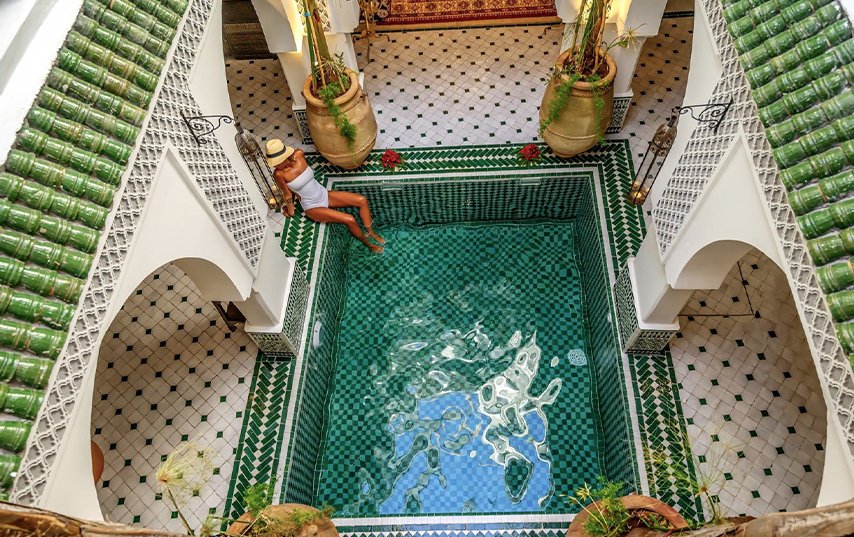
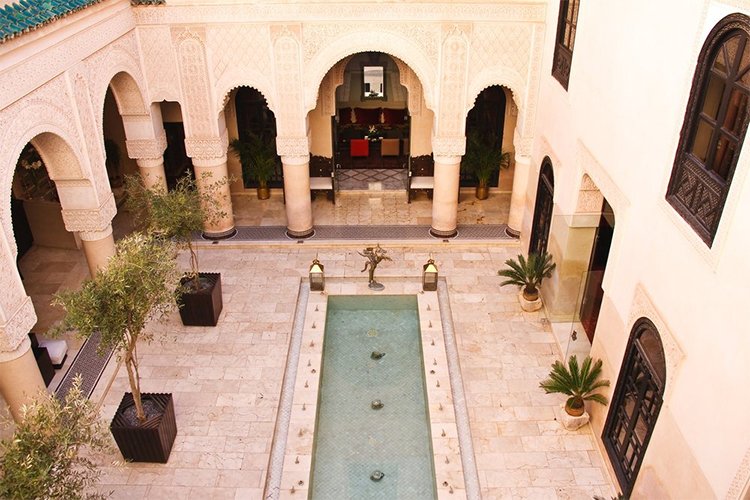
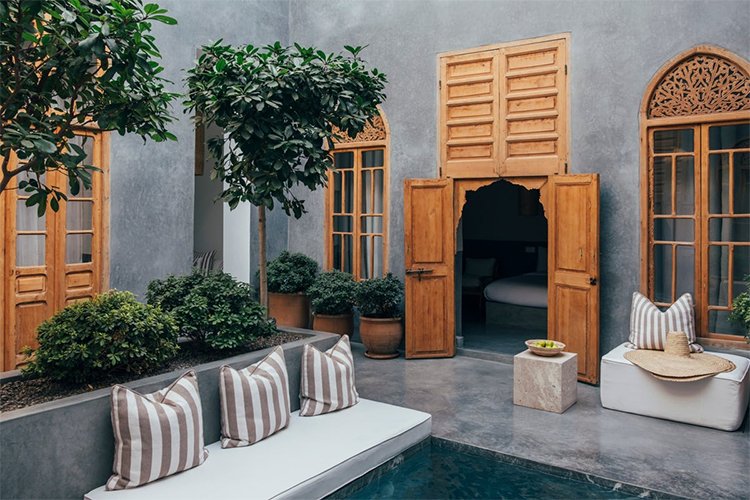
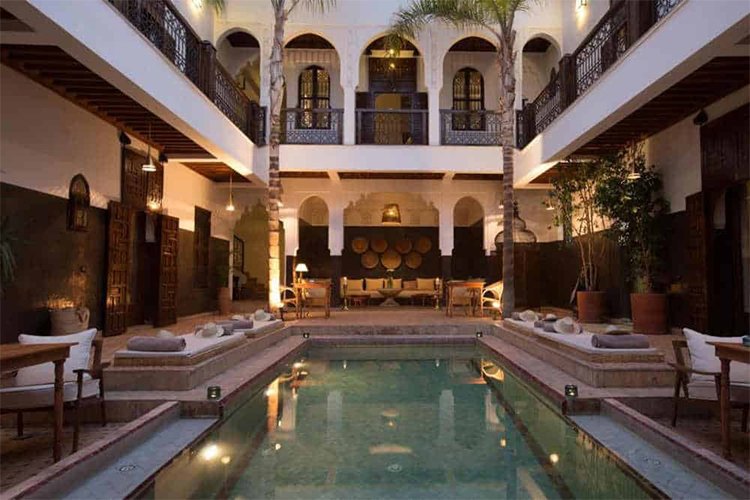

I booked a riad in Marrakech because I wanted the “real” version of the city—narrow lanes, lantern light, mint tea on a rooftop, the kind of place that feels like it belongs to Marrakech and nowhere else. I’d seen the photos: tiled courtyards, carved doorways, soft rugs, the little fountain in the middle like the building is quietly breathing.
But the part I didn’t see in the photos was the practical stuff. Would it be peaceful or chaotic? Would it be charming or exhausting? Would I sleep well, or would I lie awake listening to every sound bouncing off the walls?
What I really wanted to know before checking in was this: is a riad actually a good place to stay… or is it mostly a beautiful set for your camera?
What a “Riad” Feels Like in Real Life
If you’ve never stayed in one, a riad is basically a traditional Moroccan home built inward around a courtyard—often with a small fountain, plants, tiled floors, and rooms that open onto the center. That courtyard design is the whole point: it keeps things cooler, calmer, and more private than the street outside.
The first feeling is usually surprise. You step in from the Medina—noise, scooters, people calling, the air buzzing—and then a riad door closes behind you and it’s suddenly… softer. The light changes. The air feels cooler. Voices feel far away. It’s like walking into a secret pocket of calm.
But the second feeling is reality: riads are not modern hotels shaped like perfect boxes. They can have steep stairs, narrow hallways, quirky bathrooms, and that “old building personality.” The charm is real. So are the quirks.
And the biggest thing? A riad is not just where you sleep. It’s an experience. That can be amazing… or too much, depending on what you actually need from your stay.
Why I Wanted This Kind of Stay (Beyond the Photos)
I didn’t want Marrakech to feel like a city I passed through. I wanted it to feel like a place I lived in for a few days, even if I was just a visitor with a suitcase.
A riad changes your pace. You don’t just crash into a room and disappear. You end up sitting in the courtyard for “five minutes” that turns into twenty. You start your mornings slower. You drink tea because it’s there and because the atmosphere almost asks you to.
And honestly, Marrakech is intense in the best way. It’s bright, busy, loud, and full of sensory overload. Having a calm base inside the Medina (or just on its edge) felt like a smart counterbalance. I wanted a place that could hold me steady after the city did its thing.
What I Loved (The Parts That Made It Feel Special)
1) The Calm Is Real
The biggest win was how quickly my body relaxed once I came back “home.” You come in dusty and overstimulated, and the courtyard just resets you. Even when the riad was occupied and people were moving around, the sound felt gentler—like the building naturally tells everyone to lower their voice.
There was this small moment I kept repeating: getting back in the late afternoon, washing my hands, and sitting by the courtyard with a cold drink while my brain slowly stopped buzzing. That feeling alone made it worth it.
2) Rooftop Time Feels Like a Private World
If your riad has a rooftop, it becomes the place you remember most. Rooftops in Marrakech aren’t just views—they’re mood. You see laundry lines, satellite dishes, distant hills, palm trees, rooftops stacked like a patchwork, and that golden light that makes everything look softer than it is down in the streets.
I thought I’d use the rooftop for photos once and forget it. I ended up using it like a ritual: early morning when the city was just waking up, and evening when it cooled down and I could breathe again.
3) It Doesn’t Feel Generic
A lot of hotels around the world blur together. A riad doesn’t. Even small details—handmade tile patterns, the way the light hits the courtyard walls, the smell of mint tea—feel tied to Marrakech. It gives you the feeling of being in the destination, not just near it.
That sounds like a minor thing until you’ve stayed in enough places that feel interchangeable. Then it starts to matter.
What Wasn’t So Cute (The Trade-Offs People Don’t Mention)
1) Sound Travels (In Both Directions)
Riads can be quiet, but they’re also built around an open courtyard—meaning sound can travel. If someone is talking in the courtyard late at night, you’ll hear it. If someone is climbing stairs early, you’ll hear it. If your room door isn’t solid, you’ll notice footsteps.
Not a dealbreaker, but if you’re a light sleeper, you’ll want to plan for this—because the “romantic courtyard” can turn into “why can I hear everything?” depending on the riad and the room.
2) Getting There Can Be Stressful the First Time
This is the part nobody glamorizes: the Medina is not built for cars. You might be dropped at a gate or a nearby street and then walk through lanes with luggage.
If you arrive at night, tired, hungry, with a suitcase that doesn’t roll well on uneven ground… your first impression can be unnecessary chaos. Once you’re settled, you forget it. But that arrival moment matters.
3) The Comfort Level Depends on the Exact Room
Some riad rooms are dreamy. Some are… just okay. You might run into:
- weak lighting in the bathroom
- low water pressure
- a shower that splashes everywhere
- a room that stays cooler than you expected
- limited storage space
None of these things are shocking in older properties, but they’re the kinds of small inconveniences that start to matter if you’re staying more than one night.
How I Would Choose One Next Time (So It’s Worth It, Not Just Pretty)
1) Pick the Room, Not Just the Riad
This is the biggest lesson. The same riad can have a perfect room and a frustrating room.
Next time, I’d choose based on:
- room placement (away from the busiest courtyard path if possible)
- window situation (some rooms are naturally darker)
- whether the bathroom setup looks practical, not just pretty
- how many stairs it takes to reach the room (important if you’re carrying luggage)
2) Don’t Fall for the Most Dramatic Suite
The most photogenic room is often the least practical: tiny windows, low light, quirky corners, maybe a bathroom that looks incredible but functions awkwardly.
If I’m staying one night and want the “experience,” sure—go dramatic. If I’m staying multiple nights, I’d choose “still beautiful, but easy to live in.”
3) Plan Arrival Like You’re Protecting Your Mood
I’d do three things every time:
- travel light (soft bag beats hard suitcase)
- arrange arrival details so I’m not wandering the Medina tired and confused
- keep essentials easy to reach (water, phone, cash, power bank)
It sounds basic, but it turns your first 30 minutes from stressful to smooth—which changes your whole stay.
Who This Kind of Stay Is Perfect For
A riad is perfect for people who like travel that feels textured and personal. If you love the idea of:
- slow mornings with real atmosphere
- sitting in a courtyard and actually enjoying the pause
- a stay that feels tied to the destination
- character over “corporate hotel perfection”
…you’ll probably love it.
It’s also great for couples, because the whole environment naturally feels intimate—soft light, enclosed spaces, rooftop evenings, calm routines.
Who Should Probably Skip It
If you need everything to be predictable and modern—bright lights everywhere, perfect soundproofing, elevators, wide hallways, consistent room layouts—a riad can feel like extra effort.
You should think twice if:
- you’re a very light sleeper
- you hate stairs
- you get stressed by “quirky” bathrooms or older-building details
- you want to be picked up directly at the door by a car at any time
In that case, a modern hotel just outside the Medina (or in a newer area) might give you a better quality of life while still letting you visit the Medina during the day.
The One Thing That Surprised Me Most
I expected the riad to be beautiful. I didn’t expect it to make Marrakech feel less intense.
Marrakech can be a lot. The riad made it manageable in a way that felt emotional, not just practical. I wasn’t constantly “on.” I didn’t feel like I had to keep moving. I could come back, reset, and then go out again without feeling drained.
It made the trip feel more balanced—like the city had a heartbeat, and the riad was the slow exhale between the loud moments.
Final Verdict
Was it worth it? Yes—if you choose smart. A good riad isn’t just aesthetic. It changes how you experience Marrakech. It gives you calm inside chaos, softness inside intensity, and a sense that you’re staying in the city instead of hovering above it.
But here’s the honest rule: a riad becomes “just aesthetic” the moment you book purely for looks and ignore comfort basics. Room placement matters. Light matters. Noise matters. Arrival planning matters. Those details decide whether you feel romantic and relaxed… or slightly irritated the whole time.
No Comment! Be the first one.