The “One Material Rule” That Stopped My Home From Looking Random
You know that feeling when you look around your room and it’s not messy… but it still doesn’t look together? Like you’ve bought cute things, you’ve tried to make it cozy, but the space still looks slightly random—like a bunch of nice items that never got introduced to each other.
That was my problem for a long time. I kept thinking I needed a new couch, a new rug, a full redo. But the issue wasn’t “bad decor.” The issue was that nothing was connecting. The room didn’t have a thread.
The fix ended up being weirdly simple: the one material rule.
What the One Material Rule Is
Pick one material that you intentionally repeat around the room. Not everywhere. Not in a matching set way. Just enough that your eye starts seeing a pattern.
That material becomes the “glue” that makes everything feel connected.
Examples of a “glue material”:
warm wood (oak, walnut tones)
black metal (matte finishes)
light linen / cotton texture
rattan / woven texture
stone / ceramic (matte, earthy)
You’re not trying to make the room look like a showroom. You’re just giving it one consistent element so it stops feeling accidental.
How I Picked My Material (Without Overthinking It)
This part is easy if you use one rule: choose what already exists in your space.
Look at what you already have that’s “fixed”:
floor color
big furniture (sofa, bed frame, dining table)
hardware (door handles, lamp bases)
Then pick the material that naturally fits. For example:
If you have warm floors, warm wood repeats feel natural.
If your place already has black accents, black metal is an easy “connector.”
If your room feels harsh, linen and soft texture can be the “calm glue.”
I picked mine by asking: What do I want the room to feel like? Cozy? Warm wood. Clean and modern? Black metal. Soft and airy? Linen and light woods.
Where to Repeat It (The 5 Easy Spots)
You don’t need 20 items. You need a few “touchpoints” in different areas.
1) Lighting
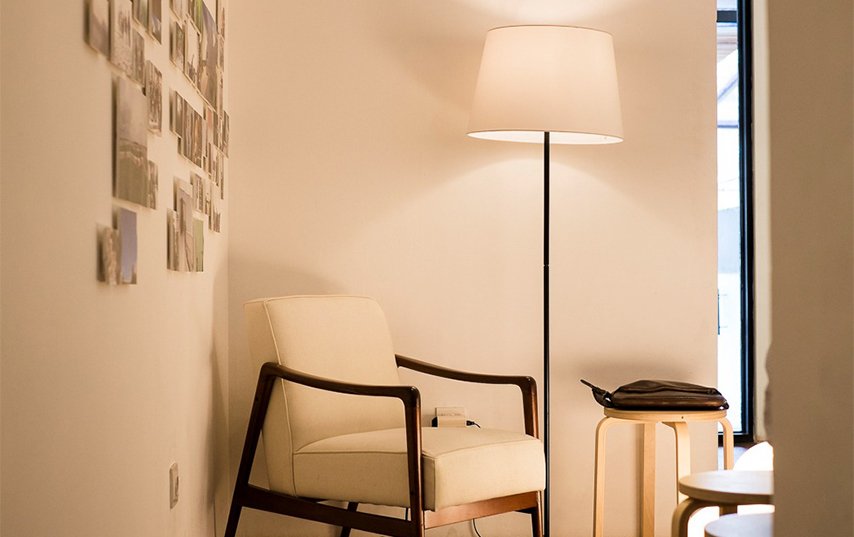
Lamp bases, floor lamp legs, even the shade texture. A repeated material in lighting makes the room feel designed without trying.
2) Small Furniture
Side table, stool, tray table, ottoman legs. These pieces are perfect because they don’t cost “big furniture” money but they add structure.
3) Hardware + Details
Picture frames, curtain rods, drawer pulls, mirror frames—these tiny things create a lot of visual consistency because your eyes notice them everywhere.
4) Textiles
If your glue material is linen/cotton texture, repeat it in pillow covers, curtains, or a throw. It makes the room feel calmer fast.
5) One Decorative “Anchor”
A big ceramic vase, a woven basket, a wood bowl—one strong piece that clearly shows the material you chose.
The “Do This, Not That” Version (Short and Useful)
Do: repeat one material 3–5 times across the room Don’t: buy everything in the same set (it looks staged)
Do: mix tones within the same material (slightly different woods can still work) Don’t: mix five different metals and call it eclectic
Do: keep one or two “wild card” pieces for personality Don’t: make every item compete for attention
The Mistake That Makes Rooms Look Random
A room looks random when every object has its own vibe. One brass lamp, one black frame, one chrome handle, one rattan tray, one glossy white vase, one rustic wood bowl—each thing might be nice, but together they look like they don’t belong to the same home.
The one material rule fixes that because it gives your eye something consistent to hold onto.
You’ll still have variety. You’ll still have personality. The difference is: the room looks like it has a point of view.
Final Take
If your home looks “random,” don’t start by replacing the big stuff. Start by connecting what you already have. Pick one material and repeat it a few times in lighting, hardware, small furniture, and one anchor decor piece. It’s one of those quiet design tricks that makes a space feel instantly more intentional—without a full makeover.



No Comment! Be the first one.